
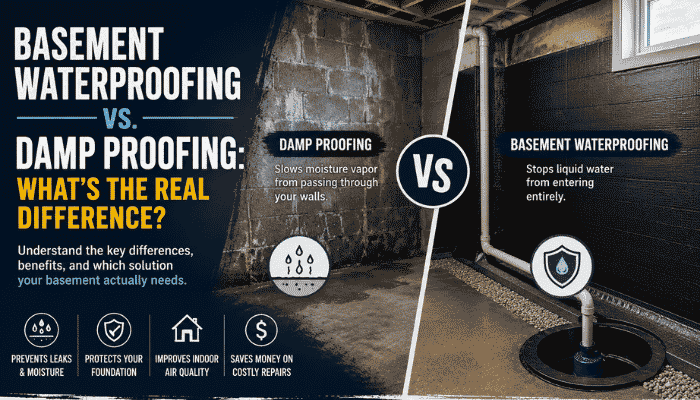
Damp proofing slows the moisture vapor from passing through your walls. Basement waterproofing stops liquid water from entering entirely.
You notice moisture on your basement walls. A contractor suggests “damp proofing.” Another recommends full basement waterproofing. The costs are different. The methods look different. And you’re standing there wondering, aren’t these the same thing?
They are not. Confusing the two is one of the most expensive mistakes a homeowner can make. The wrong treatment means the problem comes back, and when it does, it costs significantly more to fix.
What Is Damp Proofing?
Damp proofing is a coating, typically a bitumen or asphalt-based compound, applied to the exterior of a foundation wall. It creates a thin barrier that resists moisture vapor from passing through concrete or masonry. It typically involves one or more of the following:
- Bitumen/asphalt coating: A tar-like compound brushed or sprayed onto the exterior of foundation walls before backfilling
- Parging: A thin layer of mortar applied to block or concrete walls to smooth the surface and reduce moisture absorption
- Plastic sheeting or polyethylene film: A basic membrane laid against the foundation to deflect surface moisture
- Footing drains: Simple perimeter pipes installed at the base of the foundation to carry away minor groundwater before it contacts the wall
What Is Basement Waterproofing?
Basement waterproofing is a comprehensive system designed to prevent liquid water from entering your basement, regardless of how much pressure is behind it. It typically involves one or more of the following:
- Interior drainage systems: French drains, channel drains that redirect water away from the foundation
- Sump pump installation: This is to actively remove collected water
- Exterior waterproofing membranes, thick, elastomeric coatings or sheet membranes that flex with the foundation
- Crack injection: It is to seal existing entry points
- Wall anchors or carbon fiber straps: They are used when water damage has caused structural bowing
Basement Waterproofing vs Damp Proofing: Side-by-Side Comparison
| Feature | Damp Proofing | Basement Waterproofing |
|---|---|---|
| Stops moisture vapor | Yes | Yes |
| Stops liquid water | No | Yes |
| Handles hydrostatic pressure | No | Yes |
| Typical lifespan | 5-10 years | 20-30 years |
| Best for | New construction code compliance | Active leaks, wet basements |
| Cost (NYC) | Lower Upfront | Higher upfront, lower long-term |
Which One Does Your NYC Basement Actually Need?
If your NYC basement has water leaks, mold smell, wall cracks, or visible moisture damage, you most likely need basement waterproofing instead of damp proofing. Basement waterproofing is designed to stop active water intrusion and protect your foundation from long-term structural damage, while damp proofing only helps resist minor ground moisture. Homes with recurring basement dampness, seepage after rain, or foundation pressure typically require a complete waterproofing system for lasting protection.
Signs your basement needs waterproofing instead of damp proofing include:
- Visible water seeping through basement walls or floors after rainfall
- Efflorescence, or white chalky mineral deposits appearing on masonry walls
- Mold growth or a persistent musty odor caused by trapped moisture
- Cracks in foundation walls or basement flooring that allow water penetration
- Bowing, bulging, or leaning walls from hydrostatic pressure buildup
- Peeling paint, damaged drywall, or warped basement surfaces due to excess moisture
- Recurring puddles, condensation, or damp spots in corners and along walls
These warning signs usually indicate that moisture is no longer a surface-level issue. Without proper waterproofing, water intrusion can weaken your foundation, damage indoor air quality, and lead to costly structural repairs over time.
Protect Your Basement Before Minor Moisture Turns Into Major Damage
Damp proofing is a starting point. Basement waterproofing is the real solution. If your NYC home has signs of moisture, water stains, or active leaks, a damp proofing coat won’t fix it, but will only delay a larger, costlier repair. At Loose Brick NYC, we inspect basement and foundation issues across the Bronx, Brooklyn, and Queens and provide honest assessments of what your home actually needs.